AI Character Consistency Video: Keep the Same Character Across Every Scene
Most AI video tools redraw your character from scratch every generation — new face, new outfit, new vibe every time. Character consistency means the AI keeps the same person (or mascot, or product) recognizable across all your shots. Sesshu does it with reference images: drop in your character once, and generate every scene from that same reference.
Reference images close that gap. Instead of asking for a description, you show the model the exact face, outfit and style to reproduce. Seedance 1.5 Pro, Kling 4.0 and Vidu Q4 accept references directly in Sesshu.
Try it: reference-to-video generator
Sign in with Google in 1 second — check in daily for free credits (up to 60 a week)What you can do for free →
Showcase Demos & Prompts
Click 'Generate with this prompt' to auto-fill the generator above
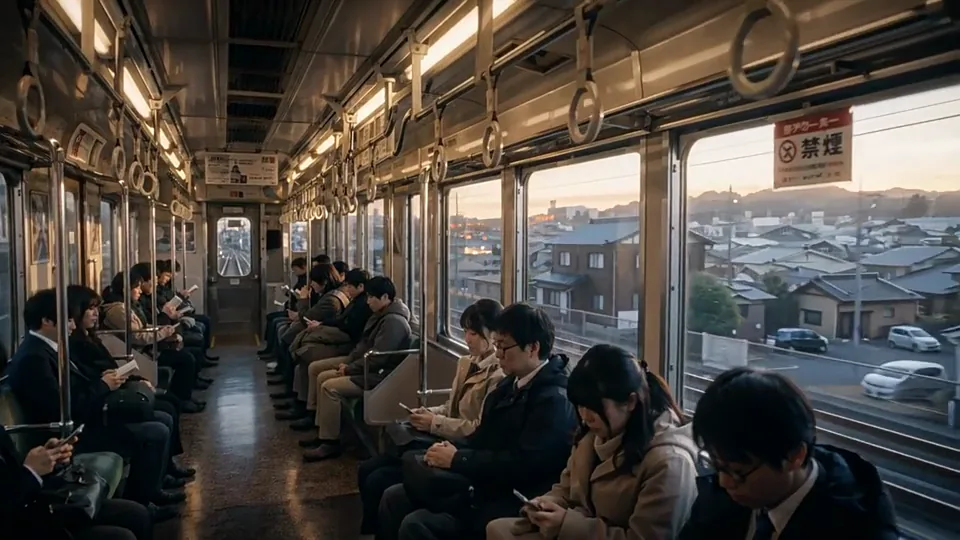
A Reunion on the Train
“Generate a 30-second, 16:9 Japanese realistic cinematic short film. The story takes place on a Japanese commuter train in the evening, where a man and a woman who met in their student days unexpectedly reunite; the brief eye contact in reality intertwines with spring campus memories, with restrained, gentle emotions and a hint of unspoken regret. 【Characters and References】 Figure 1 refers to the current female: black medium-length hair, natural makeup, beige coat and light-colored knit scarf, carrying an everyday commuter bag. Figure 2 refers to the current male: black short hair, dark coat, shirt and knit inner wear, holding an open book, carrying a dark shoulder bag. Figures 3 and 4 serve as references for the two in their student days. In the memories, they wear dark Japanese school uniforms, with facial features, eyes, and hairstyles corresponding to the real characters; the four images are only used to lock in the characters' appearance, and the reference images should not be directly made into static collages. 【Scene and Cinematography】 Old-style commuter train car, metal handrails, white circular hanging straps, long benches on both sides, realistic window and door structures. Passengers naturally sit reading or resting with their heads down. Outside the window, Japanese low-rise houses, railways, power lines, and distant city outlines slowly pass by. The setting sun shines in from the side window, creating a warm golden rim light on the characters, with soft blue-gray in the dark areas of the car. Shallow depth of field, slight film grain, 35mm cinematic quality, natural skin texture and subtle expressions, no excessive skin smoothing. 【Shots and Time】 0-4 seconds: Mid-long shot along the train aisle, camera slowly moving forward. The train sways gently with movement, and the hanging straps swing slightly. Seated passengers and the flowing streetscape outside the window create a quiet commuting atmosphere. 4-8 seconds: Cut to a side medium-close shot of the woman. She stands by the window, hand lightly holding a hanging strap or handrail, slowly turning her head after hearing movement behind her. First looking down the aisle, then briefly pausing her gaze; her expression changes from calm to a sense of familiarity, her lips slightly parting, without exaggerated surprise. 8-12 seconds: Over-the-shoulder shot of the woman, seeing the man on the other side of the aisle. He was originally reading with his head down, looks up and meets her gaze, pausing his book-holding action. The camera slowly pushes in, other passengers in the car maintain their actions, not looking at the camera. 12-17 seconds: Transition into spring memories through eye contact or similar composition. A campus road with cherry blossoms in full bloom, the two wearing student uniforms, carrying school bags, walking towards each other under the trees. Petals gently fall, the girl looks back at the boy, and the boy also stops. The light is brighter and softer than in reality, but the characters' identities remain consistent. 17-22 seconds: Naturally cut back to the same train car. The woman gently turns around and walks past the man along the aisle. The man holds a hanging strap with one hand, still holding the book with the other, his gaze following her as she passes; his body only turns slightly, no embracing or chasing. 22-27 seconds: Close-up of the man. Warm and cool light from the window sweeps across his face as he slowly turns his head to look back, his eyes filled with hesitation and memories. Express emotions with slight breathing, natural blinking, and changes in gaze, maintaining consistency in his shoulder bag, clothes, and hairstyle. 27-30 seconds: Return to a mid-shot of the train car, characters naturally separated by the aisle and hanging straps. The train continues to move forward, the setting sun outside the window gradually receding. Let the last shot linger for a moment, preserving the quiet aftertaste of the reunion, without forcing an ending. 【Sound】 Retain the low-frequency sound of train wheels on tracks, the slight swaying sound of the car, and distant muffled human voices. Use soft piano and a small amount of strings for the music, with volume lower than ambient sound. A small amount of soft Japanese narration can be added, expressing feelings of spring memories and long-awaited reunion; the tone should be natural and restrained, with pauses consistent with the rhythm of the shots, no loud dialogue or dramatic crying. 【Consistency and Exclusions】 The facial features, hairstyle, clothing, bag, and book in hand of the same character should remain consistent across all shots; only the memory segment switches to student uniforms. Train windows, seats, hanging straps, and character positions should follow realistic spatial relationships. Shot transitions should be clear and natural, avoiding sudden axis jumps, facial drifting, multiple fingers, character duplication, deformed car structure, flickering, overexposure, subtitles, titles, logos, or watermarks.”
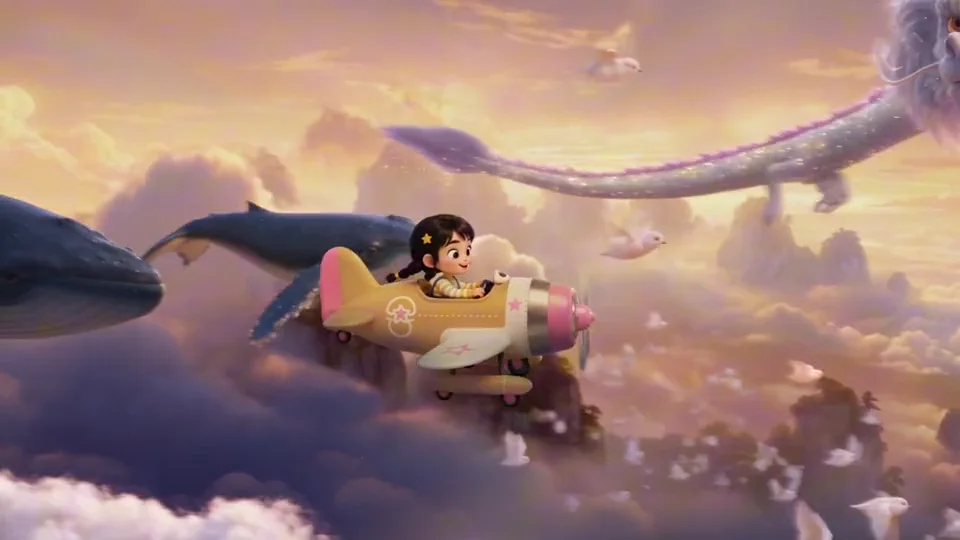
A Fantasy Journey from Clouds to the Sea
A young girl with two hair buns pilots a pink-and-white airplane through golden clouds as dragons and whales glide beside her. She then rides a surfboard across the sea, meets a small red dragon, and finally dives into a glowing underwater world. Keep the girl, her clothing, and her fantasy companions consistent through fluid transitions.
Why characters drift (and how reference images fix it)
Every text-to-video generation is independent. A prompt like 'a woman in a red coat' produces a different face every time — the model invents the person from scratch and has no memory of your last shot.
Reference images close that gap. Instead of asking for a description, you show the model the exact face, outfit and style to reproduce. Seedance 1.5 Pro, Kling 4.0 and Vidu Q4 accept references directly in Sesshu.
For multi-shot stories: generate one clean character portrait first (text-to-image or your own photo), then attach that same portrait as the reference in every scene prompt. This is the workflow used in film previz and brand series work.
How to make a consistent character video in Sesshu
- STEP 011 / 4
Create or upload your character
One clean front-facing image: a photo, an AI portrait you like, or your mascot design. One image per character.
- STEP 022 / 4
Open the reference-to-video tool
In the generator below (or at /reference-to-video), attach the character image as a reference.
- STEP 033 / 4
Write the scene, not the face
Describe action and setting — 'walks through a rainy Tokyo street, neon reflections, cinematic' — and let the reference carry the identity.
- STEP 044 / 4
Generate every scene from the same reference
Keep the same reference image for every shot of your story, and the character stays the same across scenes.
Character consistency FAQ
Can AI keep the same character across multiple videos?
+
Yes — with reference-based generation. Reuse one character image as the reference for every scene and the model reproduces that face and style. Sesshu supports this with Seedance, Kling and Vidu reference workflows.
How many reference images can I use?
+
Kling 4.0 accepts up to 15 reference images on supported plans; Seedance 1.5 Pro works from a single image reference plus context. More references lock identity stronger — keep each one clean and front-facing.
Why does my character still vary slightly?
+
Lighting, extreme angles and motion blur differ shot to shot. Anchor with a neutral front-facing reference, keep prompts about the scene rather than the person, and identity drift becomes rare.
Is it free to try?
+
Yes. Free credits via daily check-in (6–12/day, up to 60/week) cover 2–3 test scenes of one character. No credit card required.
Can I use character videos commercially, and is there a watermark?
+
Videos created on any paid plan or credit pack download watermark-free and can be used commercially (ads, YouTube, TikTok, client work) under our Terms. Free-credit downloads carry a Sesshu watermark and are for personal testing.
Does it work in mobile and desktop browsers without an app?
+
Yes. You can upload your character reference and write prompts in your own language directly in any modern desktop or mobile browser — no app install required.